Living With Endometriosis: My Pelvic Pain Story
Written by Alannah Woodrow
For as long as I can remember, my body has sent me signals that were easy to overlook. The pain I experienced during my periods would shape my life in ways few could see.
When Period Pain Became Debilitating
I got my first period at the end of 2013. I remember the symptoms, their severity, and exactly what I was doing when they began; a family camping trip during one of Queensland’s first 40°C days. In 2014, my flow became heavier and more painful, with intense cramps and marked the start of lower back pain, funky poos and nausea being involved in my periods. Initially, I tried to manage the discomfort with heat packs and over-the-counter pain relief, but slowly, it wasn’t enough.
Between 2015 and 2017, the pain worsened, lasting 3–4 days each month. Alongside the pain came extreme fatigue, low energy, brain fog, the pain waking me up as I tried to sleep, difficulty concentrating at school and a heaviness/sluggish feeling from the amount of blood loss. Standard pain relief like Panadol and Nurofen barely made a difference, so I had to rely on stronger over-the-counter medication for a break from the excruciating pain. When I ran out of this stronger medication, my symptoms reached an all-time peak, 10/10, and I could barely make it through the day. Especially with ‘simple’ daily tasks, like standing long enough to prepare breakfast, showering, even sitting at a desk at school, all became almost unbearable at the start to the middle of every period, every month. The severity of my symptoms also affected my ability to concentrate at school. I remember resting my head on my desk to try to get a moment’s relief during classes.
Living With Invisible Symptoms
The most challenging part was that these symptoms were largely invisible to those around me. Society repeatedly told young women that period pain was “normal,” something to be endured as part of growing up and being a woman. Everything to do with periods was taboo and not commonly talked about with comfort or compassion. I believed I had to push through silently, attending school and maintaining daily routines despite how much my quality of life was affected.
Finding Answers: The Diagnosis
It wasn't until August/September 2022 that things finally started to make sense. After a university tutorial, a few friends and I were walking back to our cars, talking about contraceptives and periods. As they shared, I felt safe enough to describe what mine were really like. Their shock was immediate — and one friend gently said, "Yeah, babes… that's not normal. Get checked." A moment I will never forget.
For the first time, I felt seen and validated. Maybe I wasn't exaggerating. Maybe it wasn't all in my head. Maybe I'd just been living with a level of pain most people never experience.
I booked in with my GP, who took my concerns seriously. Blood work, screening questions and a pelvic ultrasound later… Endometriosis was now likely. Because I was starting my Master of Dietetics in early 2023, I got three referrals to private gynaecologists from my GP — and yes, I intended to use all three. If you’d get three quotes to paint your house, why not for surgery?
To prepare, I wrote a single set of questions to ask each gynaecologist so I could clearly compare their responses and choose who I felt safest with in the operating room.
By then, I'd already read countless Endometriosis Facebook posts, asked for others' experiences with these doctors, and gathered advice from women in my life. So naturally, I was terrified of what surgery might reveal.
Gynae 1 didn't believe me. At my first appointment (Nov '22), they told me to "come back if the pain gets worse or changes by April." It did — and when I returned after my first clinical placement in May '23, the disconnect was even clearer. Mid-conversation, they even stood up to adjust a pillow on the couch behind me. That was my last appointment with them.
Gynae 2 was different. They answered my questions confidently, explained Endometriosis, and genuinely validated my symptoms. They didn’t trust my first ultrasound, so I had a specialised pelvic ultrasound done. Nothing urgent appeared, but the sonographer noted one ovary wasn’t moving freely and at the end said "good luck because there's something there". I walked out feeling numb. What started as wanting to “rule out Endo” was becoming a likely diagnosis.
Gynae 3 was also a fertility specialist, important to me because I knew I wanted kids and that 30–50% of people with Endo experience fertility challenges. Almost immediately, they asked if I'd had a specialist ultrasound. When I confirmed I had, they seemed taken aback and asked, "So what were you expecting from me today?” The ego in the room was hard to ignore, as was their displeasure that I sought other opinions than theirs. The appointment shifted into fertility discussions, low AMH results, and the possibility of egg freezing at age 21.
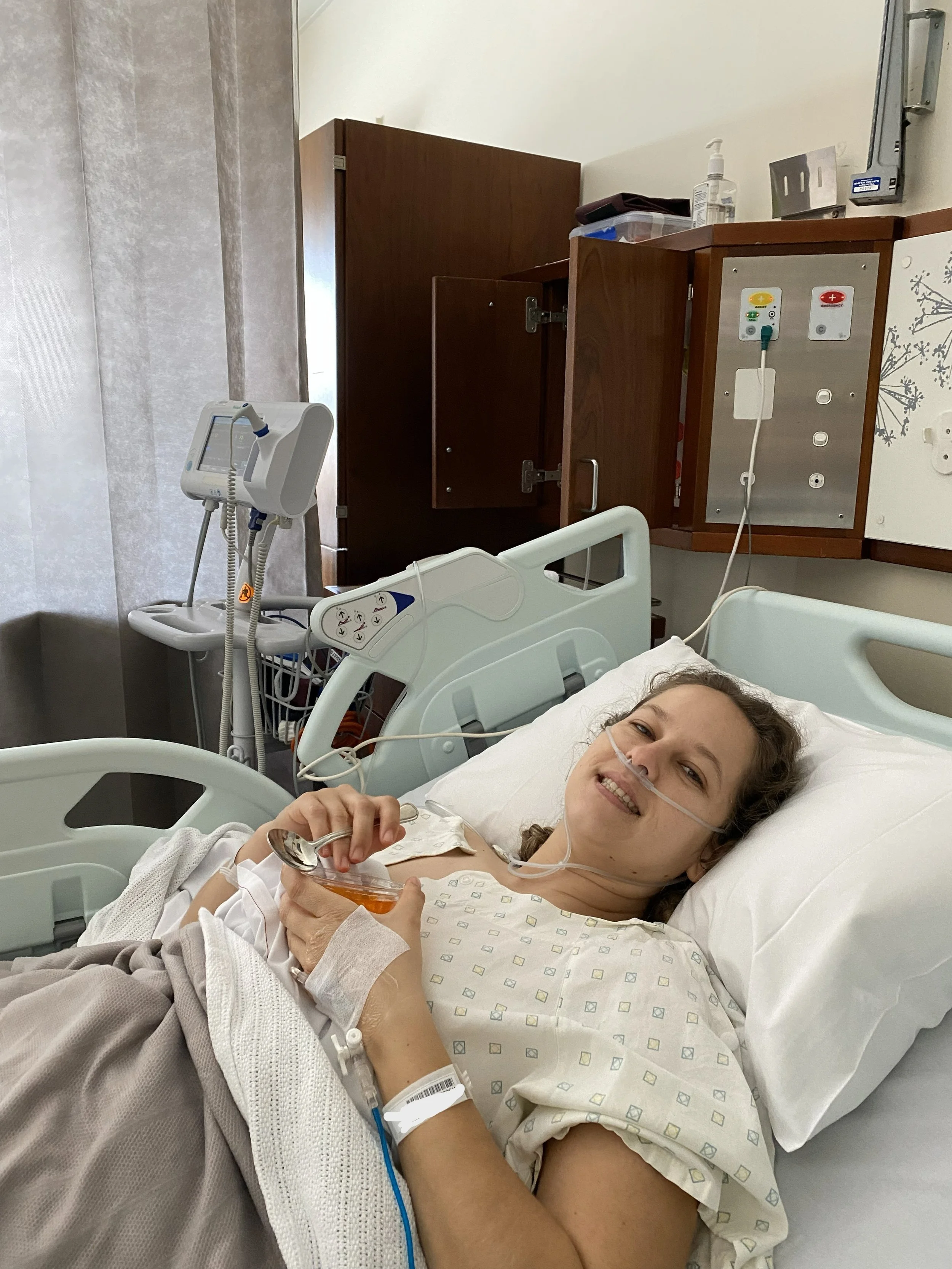
By this point, I’d experienced more gaslighting than genuine care. With my surgery date approaching and horror stories filling my Facebook feed, I was anxious, burnt out, and questioning myself. What if they found nothing? Thankfully, I was in therapy at the time, which helped me decide, book and prepare my diagnostic laparoscopy in late November 2023. In the weeks leading up, I even started dreaming about the surgery and the results.
The moment I woke from anaesthetic, I lifted my head, pulled off the oxygen mask and panicked, “Did they find endo?” The nurse replied, “Yes, they removed tissue they believe is Endometriosis.” Relief washed over me instantly.
But the final shock came later: when the nurse confirmed all pathology samples were positive for Endometriosis. Even after thinking about Endometriosis constantly, hearing the official diagnosis still stunned me.
Why Share My Story?
Endometriosis is isolating enough on its own. I navigated it solo—no parent advocating for me, no “laparoscopy fixed everything” moment, nothing that fit the usual narrative. And honestly, I’ve often struggled to see myself in our community’s stories for those exact reasons.
But here’s the thing: I'm sharing my story because I know my health would look very different today if I weren't also a health professional. Stay tuned for my next guest blog post about how I became the founder of Thrive As You Dietetics, leading the creation of a space in dietetics for humans living with pelvic pain, endometriosis, neurodivergence, and connective tissues disorders.