
Iron deficiency shouldn’t be dismissed as ‘just being a woman’
Tiredness. Dizziness. Pale skin. Breathlessness. Rapid/irregular heartbeat. Poor concentration. Increased risk of infection.
Some of these symptoms may not be from endometriosis or adenomyosis alone — iron deficiency could also be contributing.
Iron and its job in the body:
Iron is an essential mineral involved in several important proteins in the body, including haemoglobin. The body cannot produce iron itself; therefore, we must consume it through our diet. Haemoglobin helps transport oxygen around the body to tissues and organs, supporting energy production and normal body function [3].
Every time blood is lost, iron is lost too. Over time, this can deplete iron stores and lead to iron deficiency. If iron levels become low enough to affect red blood cell production, iron-deficiency anaemia can develop [3].
Why is iron deficiency common with endometriosis & adenomyosis
1. Heavy and/or prolonged menstrual bleeding
One of the biggest drivers of iron deficiency for female+ is heavy menstrual bleeding (HMB) [1,2,4,5]. Research suggests that up to 68% of people with endometriosis experience HMB, likely due to a 23% overlap with adenomyosis [1].
While an Australian study found iron deficiency was affects 22% of women with endometriosis versus 17% among those without endometriosis [4]. This Australian study also highlighted broader healthcare concerns: iron deficiency remains under-recognised and under-diagnosed in many people with endometriosis [4].
People with HMB may lose 5–6 times more iron per cycle compared to those without heavy bleeding.4 People with endometriosis and adenomyosis may also experience prolonged bleeding (>7 days) [4]. When this occurs alongside a low dietary iron intake and HMB, this can also contribute to depleting iron stores in for female+) [4].
An important takeaway from this study is that many people don’t realise their bleeding is considered heavy.1 Our QENDO Care Dietitian, Alannah, was certainly in this boat before beginning her diagnosis trek — and maybe you are too?
2. Chronic inflammation may affect iron regulation
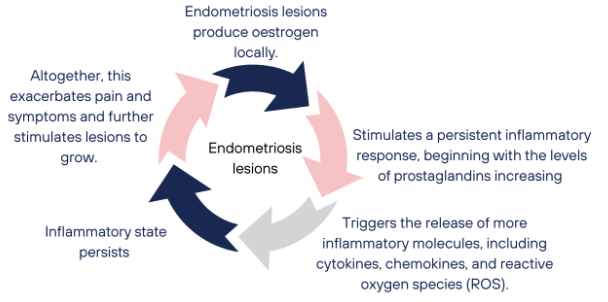
Figure 1 - Endometriosis lesions' inflammatory response explained
Chronic inflammation can also affect how iron is regulated in the body. Endometriosis’s inflammatory response, outlined in Figure 1, can influence a hormone called hepcidin. When hepcidin levels rise, they reduce the body’s ability to absorb iron from the gut and trap iron within cells rather than making it available in the bloodstream [4].
Over time, this can contribute to lower circulating iron levels and increase the risk of iron deficiency, even if dietary intake is adequate. This means some people may not only be losing more iron through HMB — they may also be less efficient at absorbing it [4].
What your iron studies blood work means
Healthcare providers use the iron studies blood test to measure the amount of iron in your body, as well as two substances involved in transporting iron in the body and storing it.
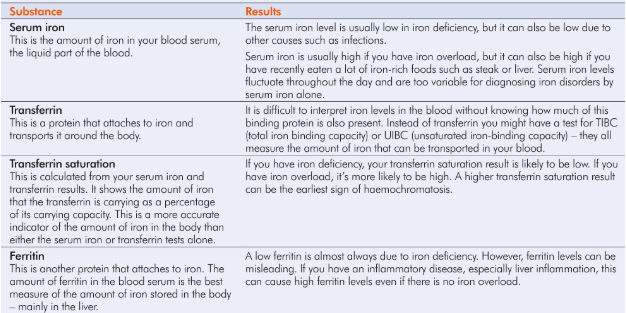
Figure 2 - What can your results tell you? Adapted from Pathology Tests Explained: Iron Studies [7].
The 4 Main Treatment Options for Iron Deficiency
Option 1: Iron supplements
Iron supplements are often a first-line strategy used to improve iron levels. But they’re not your only option, particularly if you experience the uncomfortable common side effects, including:
Nausea
Constipation
Loose stools
Darker stools
Stomach pain or discomfort
Option 2: Boosting iron-rich foods
Food-first strategies can play an important role in both initial treatment and preventing recurrent iron deficiency with or without anaemia in the long-term. To boost iron-rich foods in your diet, I recommend pairing 2-3 animal and plant-based iron-rich food sources together when you build a main meal [3].
Animal-based iron-rich foods
Animal-based sources provide haem iron, which is more easily absorbed by the body.
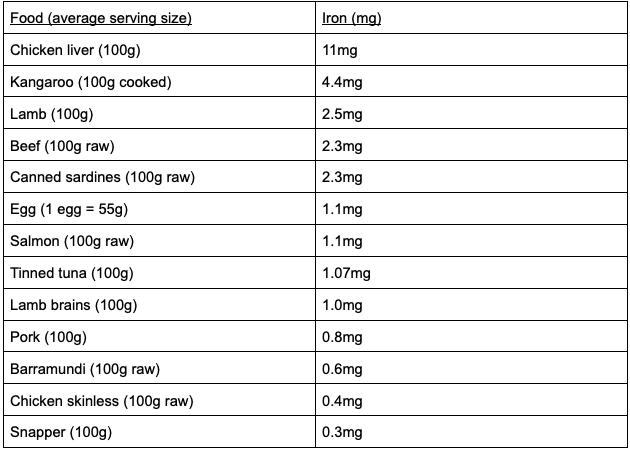
Table 1 - Animal-based sources of iron. Adapted from: Queensland Health NEMO: Iron [8].
Plant-based iron-rich foods
Plant-based sources provide non-haem iron, which is less readily absorbed by the body.
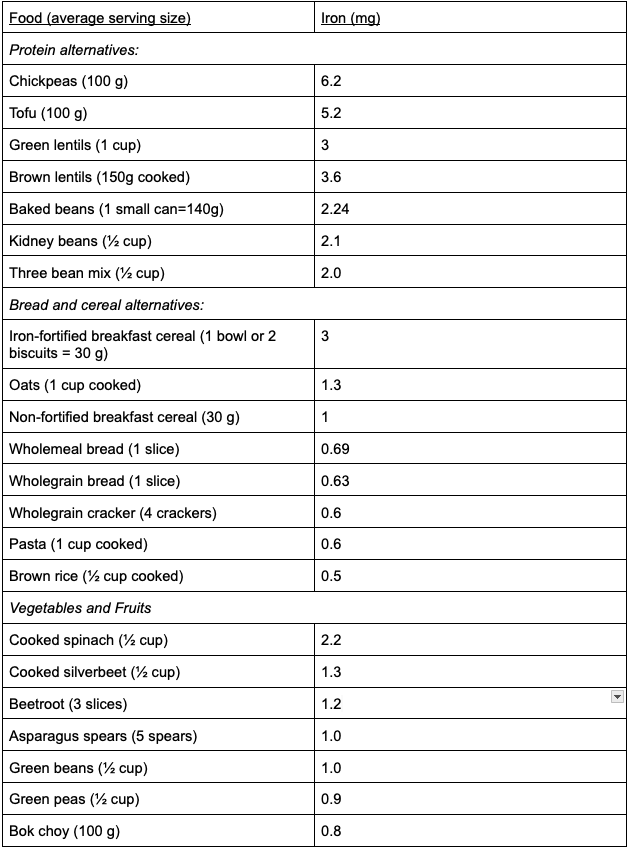
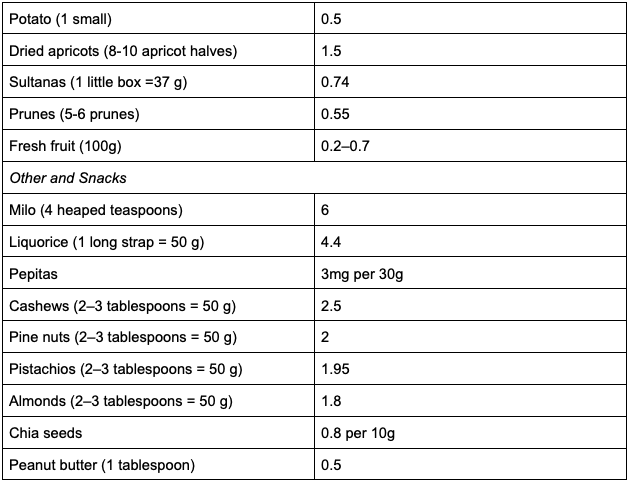
Table 2 - Plant-based sources of iron. Adapted from: Queensland Health NEMO: Iron [8].
Foods and drinks that influence iron absorption
You can boost iron absorption through the below food pairings [3].
Vitamin C helps your body absorb plant-based iron more effectively, so try pairing iron-rich plant foods with vitamin C-rich foods at meals.
Animal-based iron sources like meat, fish, and poultry can also help increase absorption of plant-based iron when eaten together. E.g., In a wholemeal pasta dish, cook a creamy based sauce, with salmon, spinach and green beans.
Cooking some plant foods (like spinach or silverbeet) can also improve the amount of iron available for your body to absorb.
Foods and drinks to avoid pairing with your iron sources [3]:
Including tea, coffee, wine, calcium-rich foods (like dairy), zinc, unprocessed bran, soy proteins, and phytates found in legumes and wholegrains. To help maximise iron absorption, try having these at different times to your iron-rich meals or supplements.
Option 3: The Iron Fish or Iron Leaf
The Lucky Iron Fish or Iron Leaf is a reusable cooking tool designed to increase the iron content of foods and liquids.9 Add the Iron Fish or Iron Leaf to boiling liquid-based meals like:
Soups
Curries
Rice dishes
Pasta dishes
Stews
Porridge
Plain water to refrigerate
After boiling for around 10 minutes, the meal becomes iron-fortified.
Option 4: Iron infusions
Iron infusions are the fastest way to restore iron stores and may be appropriate when:
Iron supplements have been ineffective or you haven’t tolerated it
A clinical need for rapid iron supply (eg. where there is insufficient time to correct iron deficiency before non-deferrable surgery)
Intestinal malabsorption
Ongoing iron (ie. blood) losses that exceed absorptive capacity
Adapted from: RACGP Patient blood management [10].
Even after an infusion, ongoing nutrition strategies (option 1 + 2 +/- 3) are still important to help maintain iron stores long-term — especially if heavy bleeding continues.
What could a week of iron support look like?
Monday
Oats with strawberries and pepitas
Wholegrain sandwich with tuna and salad + piece of fruit
Chickpea curry with spinach and green peas
1 maltofer iron supplement + orange juice
Tuesday
Eggs (1-2) on iron-fortified wholemeal toast (1-2)
Four-bean mix salad with lemon juice dressing, wholegrain roll (1) and pine nuts
Beef stir fry with broccoli, green beans and capsicum
Wednesday
Iron-fortified cereal (e.g. Weetbix) with milk and dried apricots and sultanas
Tuna pasta with spinach + pine nuts
Lentil soup with lemon juice
1 maltofer iron supplement + orange juice
Thursday
Baked beans on toast
Greek bowl with salmon and quinoa
Spaghetti bolognese containing ½ beef mince and ½ brown lentils, tomato-based sauce and pasta + baby spinach side salad
Friday
Wholemeal toast with peanut butter + piece of fruit
Chicken thigh rice bowl with greens
Leftovers of spaghetti bolognese from last night
1 maltofer iron supplement + orange juice
Saturday
Sardines or baked beans on toast + tomato + spinach cooked
Wholegrain wrap with egg, hummus and salad + piece of fruit
Tofu stir fry with broccoli and cashews
Sunday
Porridge with kiwi fruit (2), pepitas and chia seeds
Wholegrain sandwich with chicken and salad + piece of fruit
Leftovers of tofu stir fry from last night
1 maltofer iron supplement + orange juice
Snacks
Cashews and dried apricots snack plate
Fresh fruit
3-4 heaped teaspoons Milo mixed in milk
Wholegrain crackers + cheese or hummus + tomato
Adapted from: Queensland Health NEMO: Iron [8].
Final thoughts
Iron deficiency with or without anaemia is incredibly common in people with endometriosis and adenomyosis — but that doesn’t mean it should be normalised.
The good news?
There are multiple evidence-based ways to support iron levels, and treatment can be tailored to your body, symptoms, values, and preferences.
Sources:
[1] https://doi.org/10.1002/ijgo.15994
[2] https://doi.org/10.1007/s12325-020-01564-y
[4] https://doi.org/10.1016/j.whi.2024.03.004
[5] https://www.sciencedirect.com/topics/pharmacology-toxicology-and-pharmaceutical-science/menorrhagia
[6] https://doi.org/10.1016/j.xcrm.2023.101250
[7] https://ptex.au/content/pdf/1561%20PTEx%20A4%20Iron%20Studies_fin.pdf
[9] Lucky Iron Fish – Lucky Iron Life or Lucky Iron Leaf – Lucky Iron Life
[10] RACGP - Patient blood management – the GP’s guide
Disclaimer: This article is intended for general information only and does not constitute medical advice. Please consult a qualified healthcare professional regarding your individual circumstances.
Need support or interested in seeing Nutritionist Alannah? Visit qendo.org.au/care to connect with support services and explore available care options.
